Packing Services in Ottawa: Full, Partial & Fragile-Only Options
· 9 min read · Ottawa Moving Experts

At a glance
Choose the packing level that fits your move
You can delegate the entire home, ask for help with the hardest rooms, or pack independently and bring in specialists for vulnerable items.
Full-home packing
A crew packs most agreed household contents before moving day. Confirm room coverage, materials, timing and exclusions in writing.
Partial or room-by-room
Keep control of everyday essentials while getting help with a kitchen, storage area, large home or time-consuming rooms.
Fragile-only packing
Have delicate dishware, artwork, mirrors or other selected belongings professionally protected; agree on the exact item list.
Self-pack with guidance
You pack standard items and source supplies; ask the mover how boxes should be labelled, sealed and ready for loading.
The right packing plan depends on your schedule, inventory and comfort with handling delicate belongings. This Ottawa guide explains full-service, partial and fragile-only packing, what to confirm before booking, and how packing changes for local and long-distance moves.
What Ottawa packing services can include
Professional packing is a service choice, not an all-or-nothing decision. Depending on the mover and the written scope, a crew may bring packing paper, cartons, tape and protective materials, then pack agreed rooms or selected belongings ahead of the truck-loading appointment. Some households ask for a whole-home pack; others book help only for a kitchen, glassware, framed art, electronics or a crowded storage room. The key is to describe the outcome you want and get the included work recorded on the estimate.
A packing appointment is different from simply placing loose items in boxes. A careful team sorts the work area, wraps items to limit contact and movement, selects a suitable carton, fills voids, closes and labels each box, and separates anything that needs special handling. Ask whether the service includes unpacking, wardrobe cartons, crating, disassembly or removal of used materials; these are not automatically part of every packing quote. For an overview of transportation, equipment and crew services, review the residential moving services available in Ottawa.
People comparing packing services in Ottawa should ask for a clear, written description of the packing work before choosing a provider. That link is a starting point for learning about a moving company; verify its current scope, availability, insurance terms and service area directly rather than assuming every mover offers the same package.
Full-service, partial and fragile-only packing compared
Full-service packing is designed for households that value time, have a large inventory, are coordinating a tight possession schedule, or simply do not want to pack the home themselves. The crew typically works through rooms in an agreed sequence, but “full service” should never be treated as a universal checklist. Identify what stays behind, what is going to storage, what will travel with you, and whether closets, cupboards, sheds and basement contents are included. Get answers about specialty items and unpacking before signing.
Partial packing keeps the plan flexible. You might pack clothing, books and everyday linens yourself while asking a crew to handle the kitchen or a room you cannot finish before move day. Fragile-only packing is narrower still: it is suited to possessions that need deliberate wrapping, stable cartons or extra planning. Build a simple item list before requesting an estimate and note anything unusually large, valuable, awkward or irreplaceable. A practical guide to packing fragile items can help you identify questions to raise.
The most useful option is the one that matches your actual workload. For example, a small condo may need only a few hours of kitchen support, while a family home with a basement and a firm closing date may benefit from a scheduled full pack. A long-distance household may choose extra help because cartons will travel farther and need to remain stable through handling and road vibration. There is no universal “best” tier: compare the tasks, materials, number of visits and exclusions rather than relying on the package name.
How to compare a packing estimate fairly
A useful estimate begins with an accurate inventory and an honest description of your home. Tell the estimator how many rooms require packing, whether cupboards and storage areas are full, if there are stairs or limited parking, and which belongings need special attention. Photos or a video walk-through can help clarify details, but they should supplement—not replace—written confirmation of the promised service. If circumstances change substantially after the estimate, ask how the mover handles added work and who approves it.
Compare estimates line by line. Check whether labour is priced by time or as a defined package, whether cartons and wrapping materials are included or billed separately, how the crew handles unplanned extra boxes, and whether the written scope names the rooms and specialty belongings. Ask about minimum booking periods, payment timing, cancellation terms and what happens if the packing appointment runs longer than expected. The federal Office of Consumer Affairs moving advice recommends collecting multiple estimates and getting the important details in writing.
Price alone does not establish value. A low estimate that excludes materials, a second visit or a difficult room may not be comparable with a more complete proposal. Ask each mover to quote the same list of rooms and items so you can judge the difference. For packing-only work linked to transport, also confirm whether the packing provider and the moving provider are the same company, what business is responsible for each task, and how to contact the responsible party if your move includes multiple contractors.
A realistic packing timeline for an Ottawa move
Start by setting the move date, the required packing date and the point at which you will stop using each room. Then sort belongings into four groups: pack, donate or sell, recycle, and keep accessible. This makes a professional packing day more efficient because the crew can focus on items actually moving. A week-by-week packing timeline gives a broader checklist; if you are doing some work yourself, decide which boxes must remain open until the last day.
When possible, book the packing appointment before the truck date rather than assuming everything can be packed while loading is underway. A separate day may give the crew room to work and reduce pressure around elevator bookings, keys or building access. For a smaller move, a coordinated same-day pack and load may be practical if it is explicitly scheduled and the estimate accounts for the inventory. In either case, confirm arrival window, access instructions, parking arrangements, contact person and a plan for delays.
Keep a small essentials bag with identification, medication, chargers, a change of clothes, basic toiletries, important documents and anything needed before the boxes arrive. Do not pack these items by accident. Tell the crew which belongings are excluded and mark them clearly. If you are moving across Canada, retain the documents and valuables that you need to carry yourself; ask the mover what items cannot be transported and review the long-distance moving checklist before packing begins.
Protecting fragile and specialty belongings
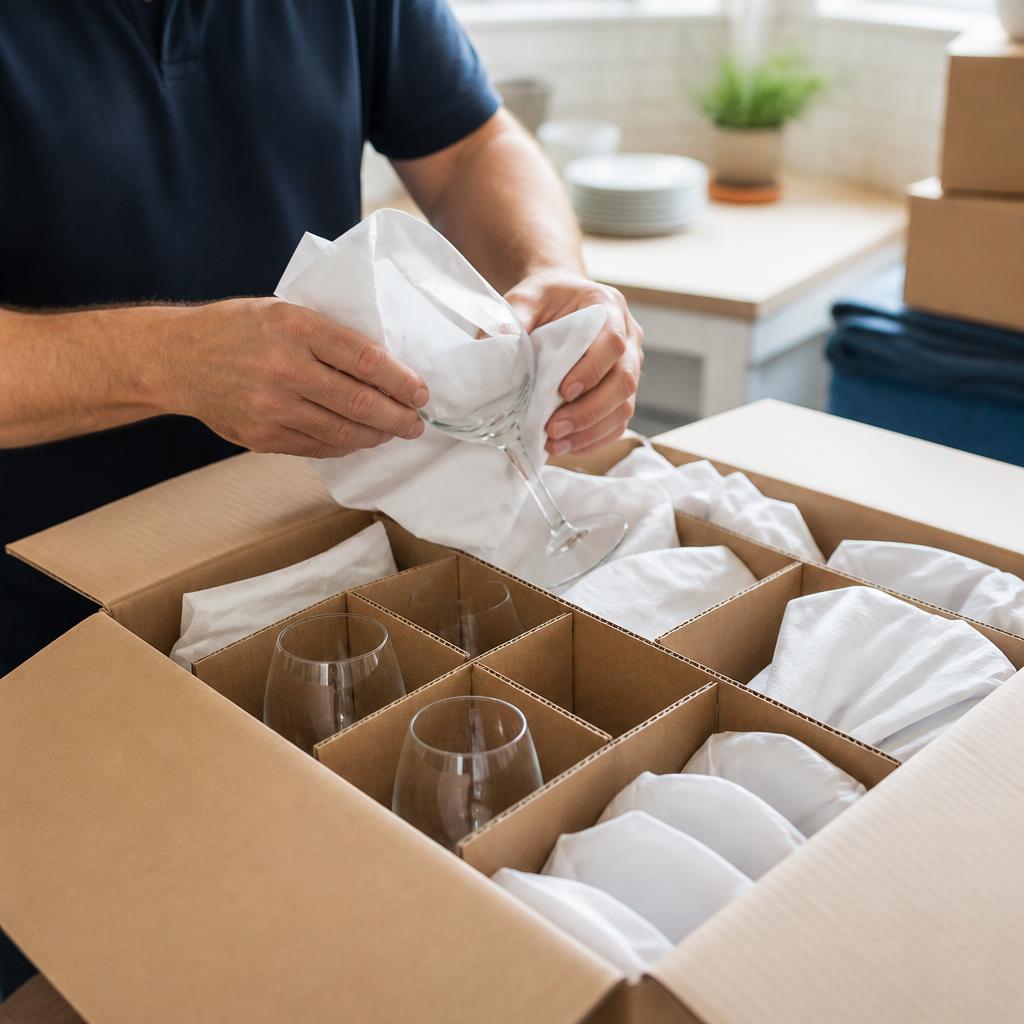
Fragile items need more than a marker that says “FRAGILE.” Plates and glassware should be wrapped to prevent hard surfaces from contacting each other, and the carton should be packed so the contents cannot shift when it is lifted or stacked. Artwork, mirrors, lamps, electronics and collections may need a different carton, protective layer or handling plan. Point out high-value or unusually shaped pieces during the estimate rather than waiting until the crew arrives. Ask what the mover can pack, what requires advance preparation and whether custom crating is available.
Be present for a brief walk-through before work starts. Review the fragile-item list, identify anything that must not be boxed, and agree on how finished cartons will be labelled. Tell the crew about loose parts, remote controls, screws or accessories that belong with particular items. Keep original product boxes only if they are structurally sound and suitable for transport; a worn retail box may not offer the protection of a purpose-selected moving carton.
Pack regulated, hazardous or personal items separately and check with the mover before assuming they will be accepted. Household chemicals, propane, fuel, some batteries, perishable food, medication and confidential paperwork can need special treatment or remain with the customer. Carrier rules vary, so ask for the current excluded-items list. Avoid leaving jewellery, cash, passports, prescription medication and irreplaceable documents in an ordinary household box.
Packing for a local move versus a move across Canada
Local packing still matters: boxes may be carried through stairwells, loaded in changing weather and stacked in a truck, even if the destination is across Ottawa. Label cartons by destination room and add a short contents note that helps you find essentials without listing valuables. Keep similar-weight items together, avoid overfilling large cartons with books, and make sure boxes can be closed safely. For an apartment or condo, coordinate packing times with loading access and building rules.
A move from Ottawa to another city or province can add more days in transit, longer periods with belongings packed, and a delivery window that needs coordination with the new home. Use sturdy, consistently sized cartons; photograph the packed condition of special belongings; and agree on inventory, labelling and delivery procedures with the mover. A detailed inventory helps both sides discuss what is being transported, while a realistic unpacking plan helps you keep essentials accessible. Read the guide to moving across Canada from Ottawa for route and delivery planning.
Whether you are comparing long-distance moving options from Ottawa, verify the actual service model and written delivery terms. Ask who will transport the shipment, whether any transfer between vehicles is expected, how the delivery window is set, and what happens if your new residence is not ready. Do not interpret a website description as a substitute for the contract. Confirm every promise with the moving company and retain a copy of the agreed estimate, inventory and contact details.
What to do before the packers arrive
The day before packing, clear pathways and make sure the crew can reach the items in scope. Finish sorting donations, empty or prepare appliances according to their manuals, and set aside anything that is travelling with you. If a building needs advance elevator or loading-area reservations, confirm them with property management. Tell the mover about narrow staircases, restricted loading zones, construction, pets or access codes so the plan reflects the actual site.
Separate items that the crew should not pack. This often includes documents, valuables, medication, open food, personal electronics, daily-use toiletries and anything you need before delivery. Put these in one visibly separate area or take them off-site. If you want boxes marked by room, use the exact room names you will use at the destination—“front bedroom” is clearer than “room 2” if the new home has different labels.
At the start of the appointment, review the scope and ask how the team will handle questions about uncertain items. At the end, walk through each room, note anything left unpacked, check that cartons are closed and labelled, and confirm next steps for loading or storage. For planning supplies for self-packed belongings, see the moving supplies guide.
Questions to ask before booking Ottawa packing help
A short, consistent question list makes it easier to compare providers and prevents different assumptions from hiding inside similar-sounding quotes. Ask for the name of the company responsible for the work, what rooms and belongings are included, whether the crew brings cartons and protection, and whether packing occurs on a separate day. Confirm how added work is approved, who is responsible for special items, what insurance or valuation options apply, and how concerns are documented before loading.
Ask whether the mover is a carrier or broker if more than one business may be involved. Confirm the written pickup and delivery arrangements, payment schedule, cancellation process and a reliable day-of contact. The Canadian Association of Movers' consumer moving tips and its consumer alerts provide useful independent checks while you compare companies. Verify credentials and references yourself; an online badge or a polished estimate should not replace due diligence.
Once you choose a plan, save the accepted estimate and any item inventory, and share changes as soon as you know them. A high-quality packing experience is not just neat boxes: it is a documented scope, careful handling, a predictable schedule and a clear handoff to the crew transporting your belongings. If a quote or promise is unclear, ask for clarification before booking rather than trying to settle the question on packing day.
Frequently Asked Questions
How much do packing services in Ottawa cost?
The price depends on inventory size, rooms selected, packing time, materials, access, specialty items and whether unpacking or crating is included. Request written estimates based on the same item list and confirm how additional work is priced.
Can I hire movers to pack only my kitchen or fragile items?
Many moving companies offer partial or fragile-only packing, but service minimums and availability vary. List the rooms and specific items you want packed and ask the mover to confirm the scope in writing.
Should I pack before the moving company arrives?
Only pack the belongings assigned to you in the estimate. Set aside essentials and excluded items, and clarify whether the crew is packing on a separate appointment or on moving day.
Is professional packing worthwhile for a long-distance move?
It can be useful when you need help preparing a large inventory or protecting delicate items for a longer transit. Compare the added service cost with your time, the items involved and the packing standards specified in the written agreement.
Do movers pack everything in a home?
Not automatically. Food, medication, valuables, hazardous materials, documents and some personal items may be excluded. Ask for the mover's current prohibited-items list and identify exclusions before packing begins.